


Towing a caravan can be overwhelming, whether you're doing it for the first time or the fiftieth. But there is a tool that can help you keep control and tow your caravan safely. You need a caravan hitch.
A caravan weight distribution hitch is a type of caravan hitch specially designed to keep the correct level between the caravan and tow vehicle. In other words, you don't get the sagging or lifting between the vehicles that can create challenges and issues while towing. This means you enjoy better braking, easier towing and a stress-free drive.
Which caravan hitch should you buy? Read on for our guide to Caravan Weight Distribution Hitches.
.jpg)
How Does A Caravan Weight Distribution Hitch Work?
Before you can work out which hitch you need, it's worth knowing exactly how they work. Whether you hear it called a caravan weight distribution hitch, load leveller or equaliser, they're all the same thing.
They are designed with an important purpose: To stop the rear of the tow vehicle from sagging when you add the weight of the caravan or trailer to the tow ball, and simultaneously stop the front of the tow vehicle and rear of the van from lifting.
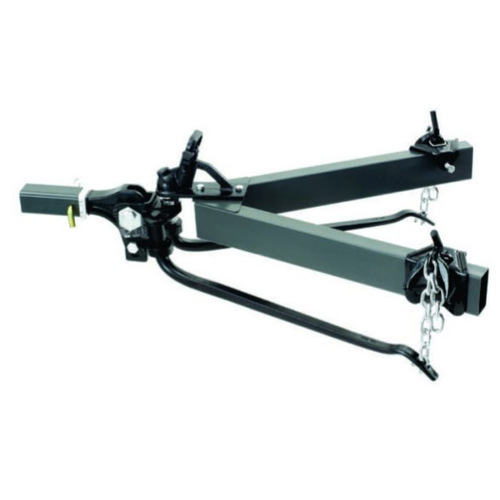
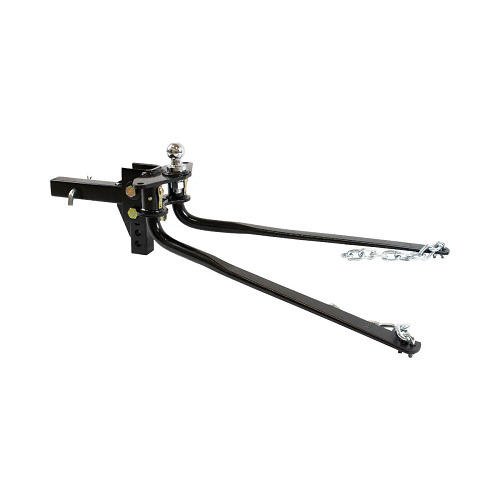
There are three components that make up a caravan hitch:
- Towball mount.
- Spring bars - these attach to the ball mount and are tensioned using chain links.
- A-frame bracket attachment - brackets are secured on the A-frame of your caravan.
This transfers the weight from the back of the tow vehicle to the front, which balances the vehicles.
How To Work Out Whether You Need A Caravan Weight Distribution Hitch
A caravan hitch isn't something every caravan owner needs - mostly, they are a good option if you are towing a long or heavy caravan.
If your van is light and well-balanced, you probably don't need a caravan hitch.
How To Check If Your Caravan Setup Is Balanced
- Measure the front and rear heights of your vehicle's wheel arches (when unloaded).
- Next, measure the front and rear heights of the caravan.
- This will give you the best case scenario of what "level" looks like.
- Then, when you hitch the van, measure the wheel arch heights again. Is the difference more than 20mm? Try rebalancing your load.
- If this still doesn't work, it's time to buy a caravan hitch.
Choosing The Right Caravan Tow Hitch
To choose the right hitch, you need to look at the tow ball and A-frame of your vehicles.
Start By Looking At Your Tow Ball:
Tow Ball Weight
This will be 10% of your Gross Trailer Mass (GTM), which is the total mass rating imposed on the trailer's axle when the trailer is fully loaded and connected to the towing vehicle. Remember, exceeding your vehicle's GTM is illegal and dangerous. The tow ball weight will be listed on the tow ball or the user manual of your vehicle.
Pro Tip: Does your tow bar indicate a maximum tow ball weight? The caravan tow hitch will not increase what tow ball weight you can apply.
Tow Ball Height
Find the height of your tow ball. Depending on your towing vehicles, you might need a tow ball mount that can be adjusted so the tow ball can be set higher or lower than usual.
Next Check Your A-Frame:
How much room do you have on the A-frame to mount the hitch?
The standard A-frame will allow 30 inch bars. But, if there's a jockey wheel or other obstruction on your A-frame, look to the 28 inch bar.
Measure A-frame depth
Tow hitches were traditionally designed to suit an A-frame with 100mm depth. Now, many caravan models have A-frames with 150mm depth and there are more tow hitches on the market to give you extra clearance.
Finally, Check Your Brakes:
If you have electric brakes on your caravan or trailer, you can choose any weight distribution hitches. However, a tow hitch will stop manual override brakes from working properly. You will need to allow for harder braking if you choose to use one.
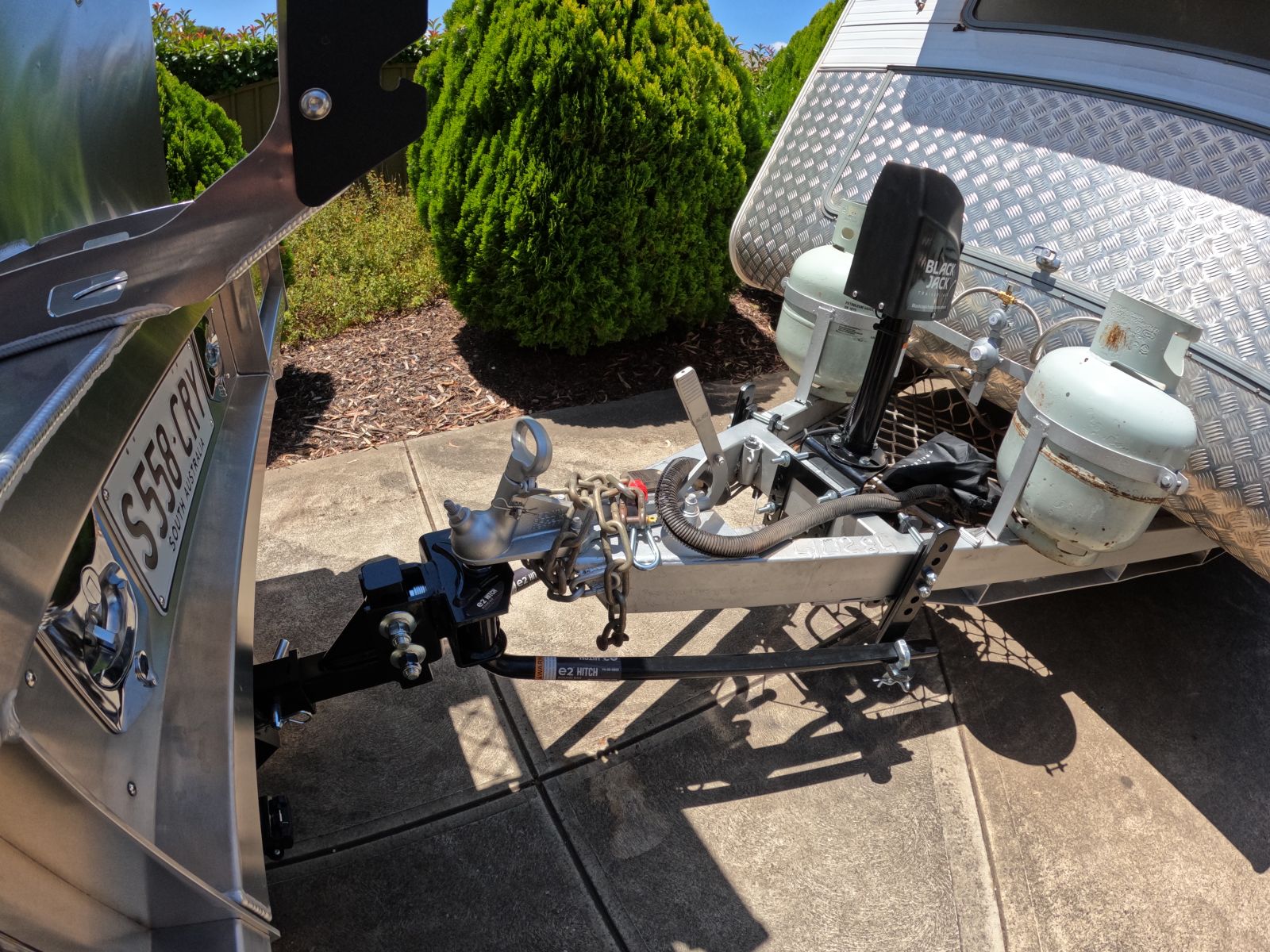
Which Caravan Hitch: Straight Bar Hitch Or Round Bar Hitch?
Look at the position of the coupling on your caravan A-Frame.
- If the coupling is in the centre or bottom of the A-frame, choose a straight bar hitch, aka Trunnion hitch.
- If the coupling is on top of the A-frame, buy a round bar hitch.
Which Brand?
Hayman Reese
Hayman Reese has been producing towing and weight distribution solutions in Australia for more than 50 years. Their weight distribution hitch range includes several models designed to suit different tow ball weight requirements.
Available capacities include:
-
600lb: Suitable for tow ball weights between 135kg and 275kg
-
800lb: Suitable for tow ball weights between 275kg and 365kg
-
1200lb: Suitable for tow ball weights between 365kg and 545kg
The range is available with either 28-inch or 30-inch spring bars (measured from the centre of the coupling) to accommodate different towing setups. Customers can also choose between two styles:
Classic
-
Features a flat bar design
-
Includes integrated cams
-
Uses a lightweight cast steel shank for durability
Standard
-
Uses round hook-style bars
-
Features integrated cams
-
Designed to provide additional clearance for caravans with a 6-inch chassis
For setups requiring additional height adjustment, Hayman Reese also offers offset shanks to help achieve the correct towing position.
TAG
TAG is an Australian towing equipment manufacturer known for its range of weight distribution hitches, shanks and towing accessories.
Their weight distribution hitch range is available in two capacities:
-
270kg
-
355kg
These options are suitable for many Australian caravan configurations and are supplied with round bar spring bars as standard.
Comparing Top Caravan Weight Distribution Hitches

| Item Specific | Hayman Reese Pro Series 600Lb Standard Wdh With 30In Round Spring Bars, Pro56003 | TAG Weight Distribution Hitch 3500/270kg |
|---|---|---|
| Brand | Hayman Reese | TAG |
| Tow Ball Weight | 275kg | 270kg |
| Towing Capacity | 2750kg | 3500kg |
Do You Need Accessories?
Depending on the tow hitch, you might need an off-set shank. Work out which one you need based on your tow ball height. Alternatively, an adjustable shank will help you switch your hitch from one vehicle to another, so you can tow trailers with different coupler heights.
DISCLAIMER* Please note, this advice is general in nature and we strongly recommend consulting the product manual and where relevant, a professional installer.